

With the development of pneumoconiosis prevention and control work, more and more people have realized that dust masks are the most direct and effective means of preventing pneumoconiosis. However, many people are not aware of this and often use ordinary masks instead of dust masks.
what are the differences between ordinary masks and dust masks?

Dust masks are also known as particulate respirators. According to China's respiratory protection standard GB2626-2019, the protection grades of dust masks are clearly divided into three levels: KN100, KN95 and KN90. The KN100 mask has a filtration efficiency of 99.97% for fine dust particles, which is the highest protection level for dust masks. The filter cotton of dust masks is divided into a barrier layer, an adsorption layer and a barrier layer. Particles larger than 20 microns are mechanically blocked by the barrier layer, those larger than 5 microns are blocked by the adsorption layer, and ultrafine particles larger than 0.075 microns are adsorbed by the barrier layer. The filtration efficiency of KN95 masks is 95%.
Ordinary gauze masks are inexpensive. They can absorb sweat in summer and keep warm in winter, but their dust-proof efficiency is extremely low. Their dust-blocking principle is mechanical filtration. Although they can block some large particles of dust in the gauze, they cannot block fine dust, especially dust smaller than 5 microns. Therefore, they cannot protect against the harm of respirable dust that can easily cause pneumoconiosis.
Ordinary medical non-woven fabric masks are mostly made by combining one or more layers of non-woven fabric. They have a high filtering effect on bacteria and viruses and are particularly effective in preventing infectious diseases transmitted through the respiratory tract. However, when used to prevent dust, their filtering effect is relatively poor.
How many types of dust masks are there?
The first type: Disposable masks, which are the disposable masks we commonly use. Currently, there are no N100 disposable masks in China, and the highest is N95, with a dust-proof rate of 95%. However, disposable masks themselves have a relatively high leakage rate, and the actual dust-proof rate is less than 75%. Its effective protection time is about 20 minutes.
The second type: half-mask type. The half-mask protective mask of Baoshun 'an adopts bionic structural design and uses medical-grade liquid silicone to ensure the maximum contact with the skin and the airtightness of the mask. The unique filter element of Baoshun 'an adopts an eccentric opening design, which maximizes the viewing Angle. The lower field of view Angle can reach 70°. It can be used in combination with KN100 series filter cotton, and the protection efficiency can reach 100%. Suitable for all dusty working environments.
The third type: Full face mask: A mask that fits the face tightly and can cover the eyes, face, nose, mouth and jaw, etc. It is suitable for environments with high concentrations of toxic gases, with a leakage rate not exceeding 0.05%.
According to its structure and working principle, it is actually divided into two major categories: one is the self-priming filtration type, and the other is the air supply type.

What do the "N" and "KN" marked on masks represent respectively?
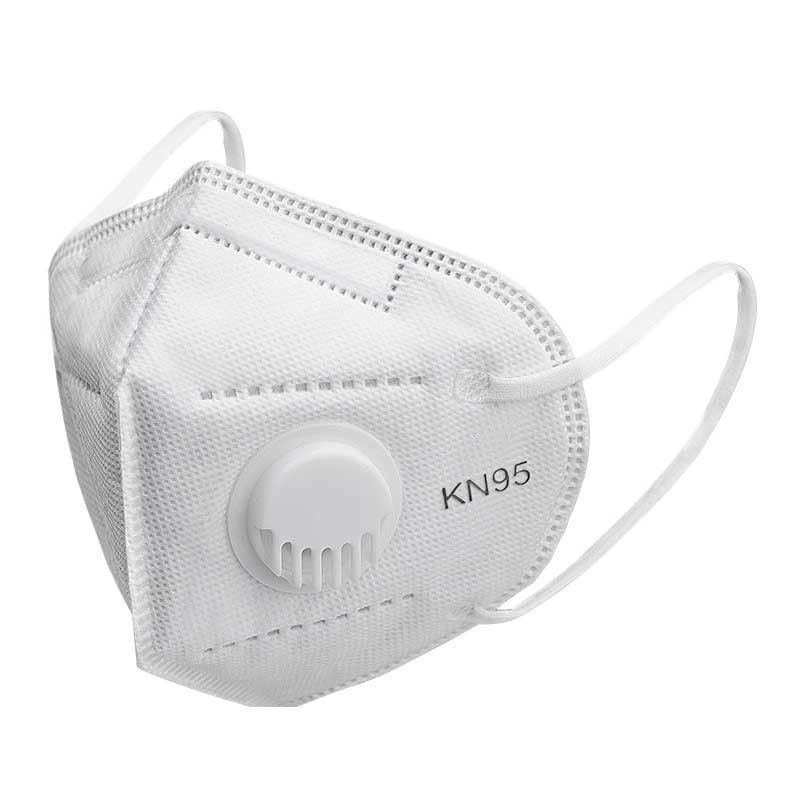
The "N" marked on the mask indicates that it follows the American standard, while the "KN" represents the Chinese standard. According to American standards, masks are classified into N, R and P categories. Class N can protect against non-oily suspended particles. Class R can protect against non-oily and oily suspended particles. Class P can protect against non-oily and oily suspended particles.
According to China's GB2626-2019 standard, masks are classified into KN type and KP type. KN indicates that the mask is suitable for filtering non-oily particles, while KP indicates that the mask is suitable for filtering both oily and non-oily particles. The number following the letter represents the protection level of the mask. The larger the number, the higher the protection level.
Is there any difference between industrial N95 masks and medical N95 masks?
Both have the same protection level and have passed the N95 grade test. The particles filtered can be as small as 0.3 micrometers in diameter. In the test, the success rate of blocking particles with a diameter of 0.075 micrometers was 95%. N95 medical protective masks are used in the medical and health industry. While protecting against viruses, they can also filter out fine particles of dust. However, N95 dust masks can only effectively block dust and cannot provide good protection against viruses and bacteria. N95 medical protective masks have the need to prevent liquid splashes. The outer surface of the mask has an additional green hydrophobic protective layer, whose main function is to prevent the splashing and penetration of slight liquids or blood. However, N95 dust masks do not have this hydrophobic protective layer.
For workers exposed to dust, it is necessary to choose professional dust masks that truly prevent dust, have good compatibility and have been certified by LA. In high-dust working environments, KN100 grade dust masks should be selected. The main body of the half-face dust mask should be cleaned regularly. At the end of the work shift, the filter cotton of the mask should be replaced. Do not place sponges, cotton yarn, toilet paper, etc. inside the main body of the mask. During the use of the mask, it is necessary to prevent it from being squeezed and deformed or contaminated with water. Do not use the main body of the mask beyond its expiration date. Replace it in time if it is damaged. For oily environments, KP series filter elements should be selected. Disposable dust masks are recommended for general protective wear or occasional use.
