


Quality control in the production of medical consumables
In medical manufacturing, quality is often misunderstood as the final inspection before shipment. In reality, most product failures are created long before a product reaches the inspection table.
An elastic bandage that loses compression after a few hours, a medical tape that leaves adhesive residue on skin, a wound dressing with inconsistent absorbency, or a mask with unstable filtration efficiency are rarely the result of a single defect. They are usually the consequence of uncontrolled materials, process variation, or inadequate production monitoring.
At AYIDA, quality control begins before production starts and continues throughout the entire manufacturing cycle. Every stage-from supplier qualification and raw material verification to process monitoring, laboratory testing and shipment release-is designed to minimize variation and ensure product consistency.
For distributors, importers, private label brands and healthcare suppliers, this approach reduces quality risks, improves market reliability and supports long-term business growth.
Understanding the Real Risks Behind Medical Products
Medical consumables may appear simple, but even minor inconsistencies can affect user experience and product performance.
Different product categories face different quality challenges.

01
For Bandages
The most common quality issues include:
- Unstable elasticity
- Uneven compression levels
- Fabric fraying
- Poor cohesive performance
- Length variation
- Inconsistent roll tightness
These issues can result in inadequate support, reduced fixation performance and customer complaints.
02
Quality risks often involve:
- Excessively aggressive adhesion
- Insufficient adhesion
- Adhesive residue after removal
- Skin irritation
- Edge lifting
- Poor breathability
Since tapes remain in direct contact with skin, balancing adhesion and patient comfort is critical.
03
For Wound Dressings
The primary concerns include:
- Insufficient fluid absorption
- Dressing leakage
- Adhesive border failure
- Delamination
- Inconsistent thickness
- Packaging integrity issues
These factors directly influence wound management outcomes.
04
For Masks
Key quality risks include:
- Filtration inconsistency
- Weak ear loops
- Poor facial fit
- Ultrasonic welding defects
- Layer separation
- Nose clip instability
Even small production deviations can affect comfort, protection and compliance with market standards.
AYIDA evaluates suppliers based on

- Manufacturing capability
- Material consistency
- Regulatory compliance
- Traceability systems
- Quality records
- Long-term supply reliability
Approved suppliers undergo periodic evaluations to ensure continued compliance with quality requirements.
This approach helps minimize batch-to-batch variation and reduces the likelihood of unexpected material changes.
Incoming Material Verification
Every production batch begins with raw material inspection.
Materials are not released for production until they meet predefined specifications.
Bandage Materials
Fabric weight
Elasticity range
Tensile strength
Cohesive coating consistency
Surface cleanliness
Color uniformity
Medical Tape Materials
Adhesive characteristics
Backing thickness
Release liner quality
Moisture resistance
Material appearance
Mask Materials
Non woven fabric specifications
Melt-blown media quality
Fiber distribution
Material cleanliness
Structural consistency
Wound Dressing Materials
Absorbent layer performance
Adhesive components
Barrier film quality
Material integrity
Packaging materials
Process Control: Preventing Defects Instead of Finding Them
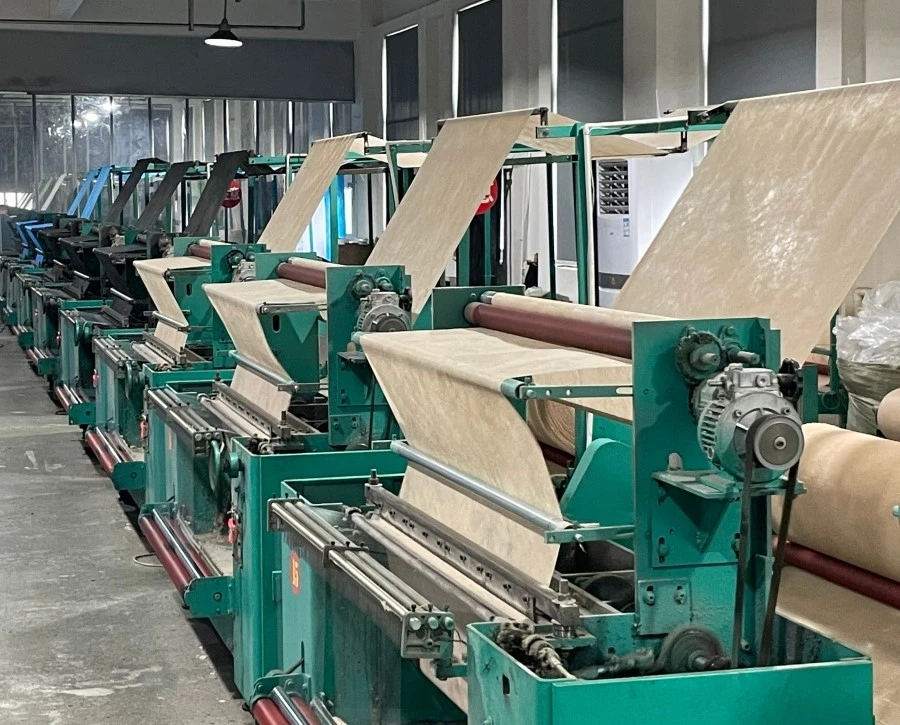
The most effective quality systems do not rely solely on final inspection.
They prevent defects during manufacturing.
For this reason, AYIDA applies in-process quality monitoring at multiple production stages.
Rather than waiting until products are completed, critical process parameters are continuously reviewed and recorded.
This allows production teams to identify abnormalities before they affect large quantities of products.
Critical Control Points in Bandage Manufacturing
Bandages are often evaluated by end users based on comfort, support and consistency.
To achieve stable performance, several critical factors must be controlled:
Elastic Recovery
Bandages must return to their original dimensions after stretching.
Insufficient recovery may result in poor support performance.
Fabric Uniformity
Uneven fabric density can create inconsistent compression across the bandage.
Cohesive Coating Distribution
For self-adhesive bandages, coating consistency directly affects self-adhesion performance.
Roll Formation
Improper winding tension can lead to deformation during storage and transportation.
Each parameter is monitored throughout production to maintain consistency.
Critical Control Points in Medical Tape Manufacturing
Medical tape performance depends on a precise balance between adhesion and skin protection.
Excessive adhesive strength may damage fragile skin.
Insufficient adhesion may lead to dressing failure.
Key control points include:
Adhesive coating weight
Coating uniformity
Slitting precision
Roll tension
Release liner performance
Surface cleanliness
Continuous monitoring helps ensure consistent tape performance across production batches.

Critical Control Points in Mask Manufacturing
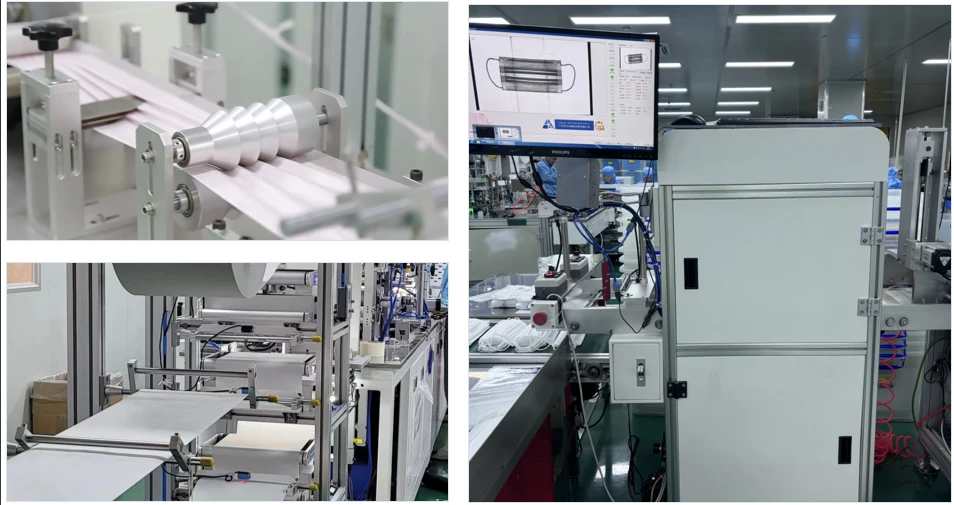
Masks require strict dimensional and structural consistency.
Production teams monitor:
Ear loop welding strength
Nose clip positioning
Layer alignment
Ultrasonic sealing quality
Fold consistency
Visual appearance
Routine testing verifies that production outputs remain aligned with established specifications.
Critical Control Points in Wound Dressing Manufacturing
Modern wound care products involve multiple functional layers.
A defect in one layer may affect overall dressing performance.
Key control parameters include:
Absorbent core placement
Dressing thickness
Adhesive border strength
Sealing integrity
Sterile barrier protection
Fluid management performance
These controls help maintain product reliability throughout its intended use.

Laboratory Testing: Verifying Product Performance

Inspection alone cannot confirm how a product will perform during actual use.Laboratory testing provides measurable performance data.
Bandage Testing
- Tensile strength
- Elastic recovery
- Compression consistency
- Fabric durability
Medical Tape Testing
- Peel adhesion
- Holding power
- Breathability
- Residue evaluation
Mask Testing
- Bacterial Filtration Efficiency (BFE)
- Particle Filtration Efficiency (PFE)
- Differential Pressure
- Synthetic Blood Resistance
Wound Dressing Testing
- Absorption capacity
- Retention performance
- Moisture management
- Adhesive strength
Testing data helps verify production stability and supports product validation.
Batch Consistency: A Major Concern for Global Buyers
Many importers focus on passing samples.
Experienced buyers focus on maintaining quality after hundreds of shipments.
The true challenge in medical manufacturing is not producing one good batch-it is producing thousands of identical batches over time.
To support consistency, AYIDA maintains:
Standard operating procedures
Process validation records
Batch production records
Inspection documentation
Equipment maintenance schedules
Employee training programs
These systems help reduce variability and improve repeatability.We hold ISO, FDA and CE certificates, and our production strictly follows the ISO medical system.

Continuous Improvement Is Part of Quality Control

Quality management is not a static system.
Customer feedback, production data and inspection results provide valuable information for improvement.
Our quality team regularly reviews:
- Customer complaints
- Product returns
- Internal audit findings
- Supplier performance
- Process capability data
Corrective and preventive actions are implemented whenever opportunities for improvement are identified.
This continuous improvement cycle helps strengthen product quality over time.
Why Buyers Choose Manufacturers With Strong Quality Systems?
When selecting a supplier, product price is only one part of the decision.
The cost of quality failures can be significantly higher than the cost of the product itself.
Potential consequences include:
- Product recalls
- Market complaints
- Distribution disruptions
- Regulatory issues
- Brand reputation damage
For this reason, many professional buyers evaluate a manufacturer's quality management system before evaluating pricing.
At AYIDA, quality control is not treated as a final checkpoint. It is integrated into supplier management, material inspection, process control, performance testing and continuous improvement.
This systematic approach helps ensure that every bandage, medical tape, mask and wound dressing delivered to our customers meets consistent quality expectations-batch after batch, shipment after shipment.
