

Hallux valgus is a common foot deformity characterized by the big toe deviating outwards, forming a "bunion." Many people, upon discovering this condition, immediately buy a toe separator, hoping to alleviate symptoms or even "correct" the deformity. But the question is, are these corrective devices truly effective? Let's discuss this together.
What is Hallux Valgus?
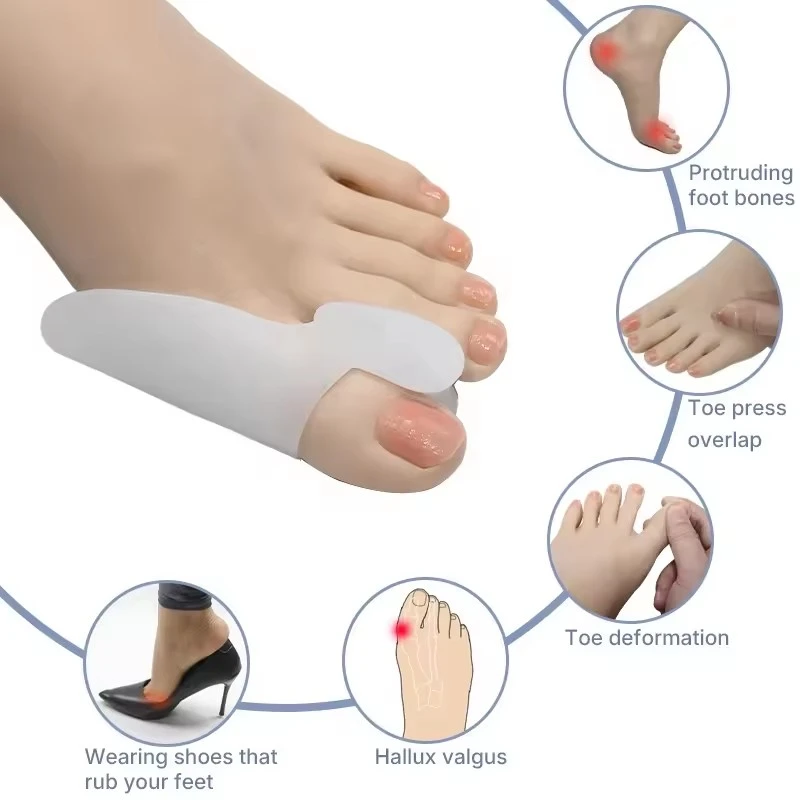
Hallux valgus refers to the big toe deviating outwards, forming a protruding "bunion," usually accompanied by symptoms such as pain and swelling. This condition is particularly common in women, especially those who frequently wear high heels or narrow-toed shoes.
How do toe separators work?
Toe separators are typically made of materials such as silicone or plastic. They attempt to pull the big toe back to its normal position by applying external force. Some corrective devices are designed for overnight wear, while others can be used during the day.
Are toe separators truly effective?
Mild Hallux Valgus: For mild hallux valgus (valgus angle less than 20°), orthotics may have some effect. Long-term wear can prevent symptoms from worsening and alleviate pain to some extent.
Moderate or Severe Hallux Valgus: For moderate or severe hallux valgus, the effect of orthotics is very limited. This deformity involves structural changes in the bones, joints, and ligaments, making true "correction" difficult to achieve simply by applying external force.
Short-term relief, long-term ineffectiveness: Some studies suggest that long-term orthotics may lead to further relaxation of the foot ligaments, actually worsening hallux valgus.

Limitations of Orthotics

Inability to address structural problems: The root cause of hallux valgus is insufficient arch support and weak toe muscles; orthotics cannot fundamentally address these issues.
Poor wearing comfort: Many orthotics require prolonged wear, especially at night, which may cause discomfort and even affect sleep quality.
Varied prices, uncertain effectiveness: A wide variety of orthotics are available on the market at varying prices, but their effectiveness is difficult to guarantee. Some more expensive orthotics are not necessarily more effective than cheaper ones.
Other Treatment Options
Conservative Treatment
Wear appropriate shoes: Choose shoes with a loose toe box and good support; avoid high heels or narrow-toed shoes.
Foot muscle exercises: Strengthening the foot muscles through a series of foot exercises helps improve arch support.
Physical therapy
Relieve pain and inflammation through physical therapy, such as massage and physical therapy.
Surgical Treatment
For severe hallux valgus, especially for patients whose walking and quality of life are already affected, surgery may be the most effective treatment. Common surgeries include Scarf osteotomy and modified McBride procedure.
Conclusion
Toe separators may provide some relief for mild hallux valgus, but they cannot achieve true "correction." For moderate to severe hallux valgus, the effect of orthotics is very limited and may even worsen symptoms. Therefore, it is recommended to consult a professional doctor or foot and ankle specialist before choosing an orthotics to develop a suitable treatment plan based on individual circumstances.
Helpful Tips
If you notice signs of hallux valgus, don't wait until the symptoms become severe before taking action. Early detection and treatment are crucial for protecting foot health. Choosing appropriate shoes and a healthy lifestyle are also important measures for preventing and alleviating hallux valgus.