

The core structure of self-adhesive bandages is composed of medical-grade non-woven fabric or pure cotton substrate combined with natural rubber. It eliminates traditional chemical adhesives, achieving fixation through physical self-adhesion. This design brings three key advantages:
Technical Principles and Material Advantages
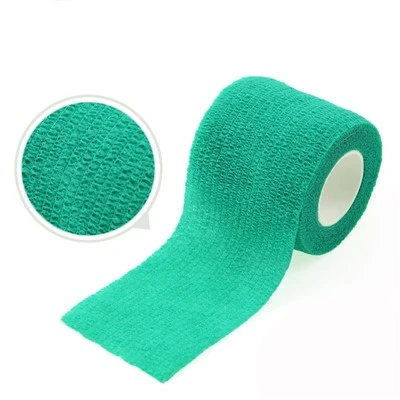
Zero Residue Adhesion: The bandage only adheres to itself, not to hair or skin. Removal is painless, avoiding hair loss and skin damage, and significantly reducing animal stress.
Dynamic Pressure Control: A 180%-220% elasticity allows for gradient pressure bandaging, ensuring both fixation and preventing blood circulation obstruction. Clinical trials show that following the "one-finger gap principle" (allowing a finger to be easily inserted into the bandage edge) effectively prevents the risk of ischemia caused by overly tight bandaging.
Breathability and Moisture Resistance Balance: The perforated process allows the material to maintain breathability while providing basic waterproofing. Even when exposed to animal saliva or a damp environment, the adhesion retention rate can exceed 72 hours.
Multi-Species Application Practices
Companion Animals (Dogs, Cats, etc.)
The 5cm x 4.5m bandage is suitable for wound treatment in over 85% of small and medium-sized dogs and cats. The standard operating procedure is as follows:
After covering the wound with sterile gauze, wrap it from distal to proximal using a 50% overlap method.
The toe tip must be exposed for daily monitoring of swelling and color changes.
In cases of indwelling catheter fixation, using self-adhesive bandages can extend the catheter retention time to an average of 7.6 days, reducing the complication rate to 5.2%.
Horses and Large Livestock
The 7.5cm and 10cm wide bandages are commonly used for hoof care and hind limb support in horses. In equestrian sports, the bandage should be used in conjunction with a plaster cast, but hoof temperature should be checked daily to prevent circulatory obstruction caused by overly tight bandages.
Exotic Pets and Special Economic Animals
For rabbits, poultry, etc., weighing less than 5kg, a 2.5cm narrow bandage is recommended. These animals have thinner skin stratum corneum, so pure cotton material is recommended to reduce the risk of allergies.

Clinical Practice Recommendations

Before bandaging: Shave 3-5cm of hair around the wound, clean and thoroughly dry the skin.
During bandaging: Overlap each wrap 50%-75% to avoid wrinkles; use a figure-eight wrapping method around joints.
After bandaging: Check distal circulation, exudate saturation, and changes in animal behavior daily.
Replacement indications: Replace when absorbent pad is more than 2/3 saturated, odor appears, animal continues to lick or bite, or after 48-72 hours.
If you need to purchase self-adhesive bandages, please contact AYIDA, and we will reply with a quote within 24 hours.